Most patients need three initial PRP sessions, spaced four to six weeks apart, before hair thinning starts to visibly reverse. That single number, though, hides the more useful question: why three, why not one, and what happens after that?
If you’ve been researching PRP hair treatment because of thinning hair, or your part is widening, your hairline is receding, or your ponytail feels thinner than it used to, you’ve probably already found a dozen different answers to “how many sessions.” Some clinics say two. Some say six. The honest answer depends on how your scalp responds to biology, not marketing. The answer is platelet rich plasma injections that stimulate hair growth.
How Many PRP Hair Loss Treatment Sessions You Actually Need
For most people dealing with early to moderate hair thinning, the standard treatment regimen is three PRP sessions spaced four to six weeks apart, followed by a maintenance session every six to twelve months. This isn’t an arbitrary number — it reflects how long it takes growth factors to trigger a measurable response in hair follicles, and how the hair growth cycle itself unfolds. Patients with more advanced androgenetic alopecia or male pattern baldness sometimes need four sessions in their initial round. People using PRP alongside a hair transplant, or with alopecia areata, may follow a different schedule set by their provider. Visible improvements in hair density typically appear between months three and six, with full results assessed around the twelve-month mark.
How PRP Hair Treatment Works
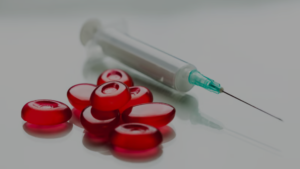
Platelet rich plasma is derived from a small blood sample taken from your own arm — the same way a routine blood test works. That sample goes into a centrifuge, which spins at high speed to separate red blood cells and clotting factors from the platelet-rich layer.
Platelets contain growth factors that signal the body to repair tissue, including vascular endothelial growth factor, which supports blood vessel formation around hair follicles. This is the same biological mechanism used in orthopedics to accelerate healing in chronic tendon injuries — PRP therapy simply applies it to the scalp instead of a joint.
Because PRP uses your own blood, the risk of allergic reaction is low. There’s no synthetic drug, no donor tissue, and no foreign protein being introduced into your body.
What Happens During a PRP Session
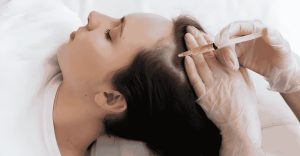
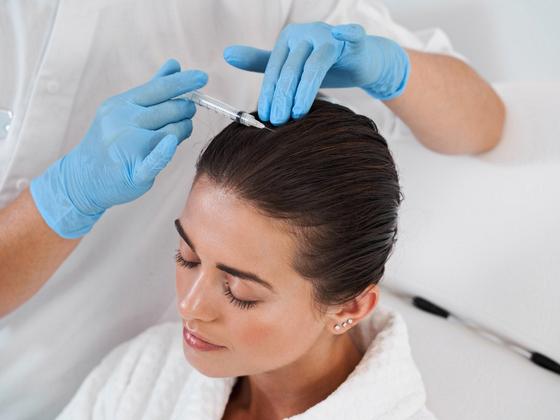
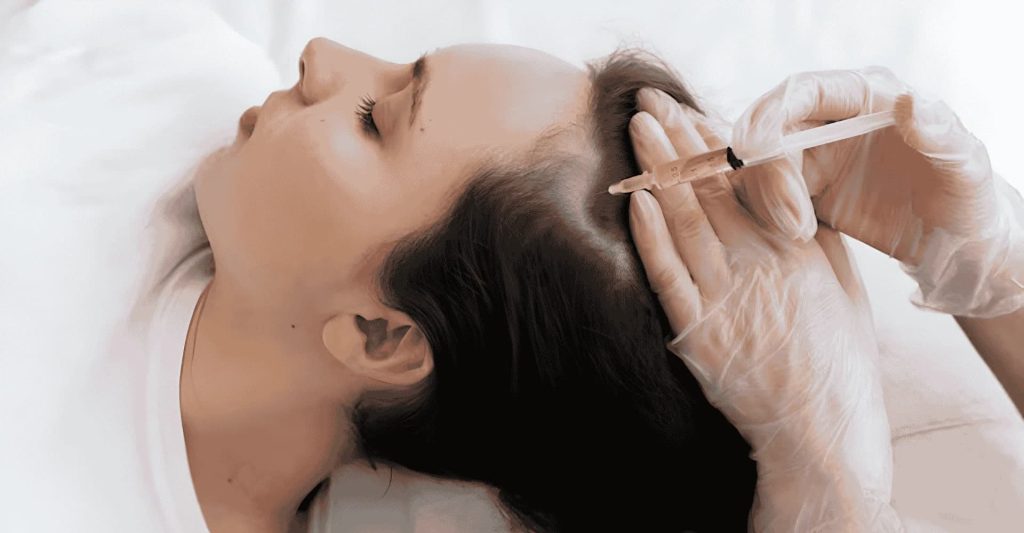
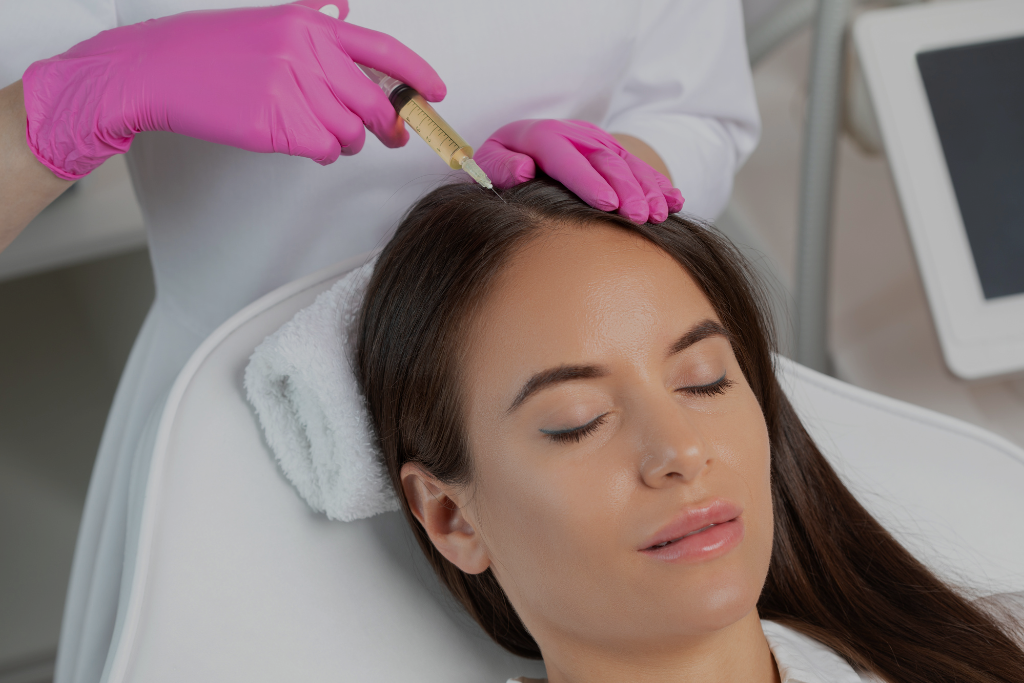
A typical platelet rich plasma therapy session at a Vaughan clinic takes about 45 to 60 minutes from blood draw to final injection. After the blood sample is processed in the centrifuge, the concentrated plasma is injected directly into the scalp at the treatment area, usually across the crown, front hairline, and receding hairline where thinning is most active.
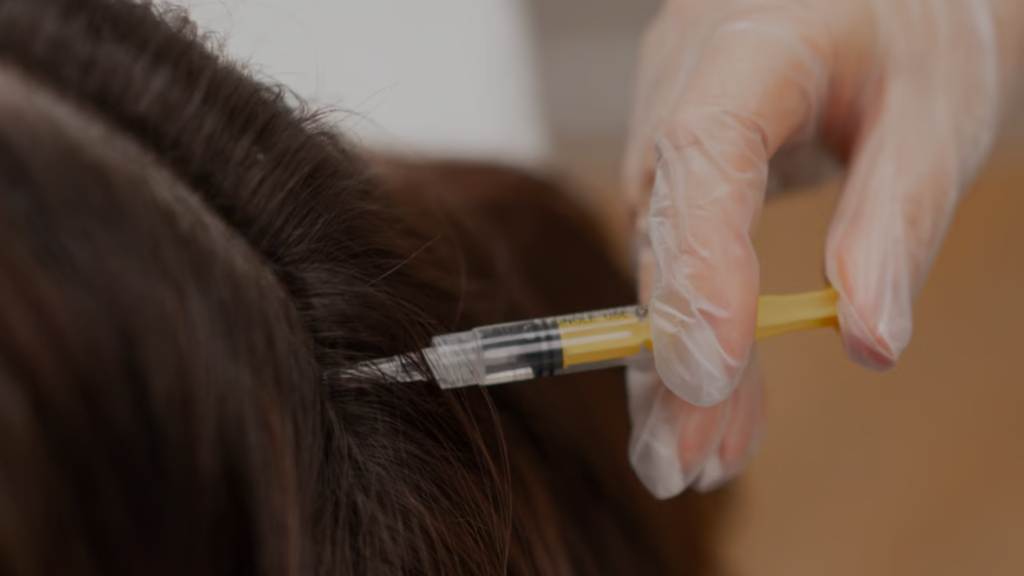
A topical numbing cream is usually applied to injection sites beforehand, since the scalp is injected in a grid pattern to distribute growth factors evenly. Most patients describe the sensation as pressure and mild discomfort rather than significant pain. It’s a non-surgical procedure, which means there’s no incision, no sutures, and no downtime required afterward — most people go straight back to work.
The Full PRP Treatment Timeline: Session by Session
Session One: Establishing the Baseline
Your first PRP hair regrowth session usually follows an initial consultation, where the practitioner reviews your medical history, current medications, and scalp condition to confirm you’re a good candidate. Some clinics take scalp photos here to track hair density objectively over time, since visual change in the first weeks is minimal.
Session Two: Reinforcing the Response
The second session, typically four to six weeks later, reinforces the biological signal sent to hair follicles. This is where cell reproduction in the follicle begins accelerating, though most patients still won’t see dramatic change yet — hair growth occurs gradually, not overnight.
Session Three: Consolidating Results
By the third session, many patients start noticing less shedding in the shower or on their pillow, along with finer new hair growth along the front hairline. This is generally the point where noticeable results begin to separate PRP responders from non-responders.
Beyond Session Three: Maintenance
After the initial three sessions, PRP treatment requires maintenance sessions every six to twelve months to sustain results. PRP therapy does not permanently cure hair loss or alter the underlying genetics of hair loss — it manages an active process, which means ongoing sessions matter more than most patients expect going in.
PRP Sessions for Different Types of Hair Loss
Not everyone follows the same three-session path. The cause of your hair thinning changes what a realistic treatment regimen looks like.
Androgenetic alopecia (male pattern baldness and female pattern hair loss) responds most predictably to PRP because the follicles are miniaturizing but still present and active. This is where the standard three-session protocol tends to perform best.
Alopecia areata, an autoimmune condition causing patchy hair loss, sometimes requires a different injection pattern and frequency, decided in partnership with a dermatologist, since the underlying medical condition driving hair loss is different from pattern baldness.
Female pattern hair loss, which tends to present as diffuse thinning across the crown rather than a receding hairline, generally follows the same three-session starting point, though some women require closer-spaced sessions if thinning is more advanced.
How Much Does PRP Hair Restoration Cost in Vaughan?
Cost is one of the most searched questions alongside session count, so it’s worth being direct about it. PRP treatment costs between $500 and $1,500 per session depending on the clinic, the practitioner’s experience, and the technology used to process the blood sample. Single sessions in Vaughan typically range from $600 to $1,000.
Since most patients require three initial PRP sessions, many clinics offer package pricing that reduces the per-session cost compared to booking one at a time. It’s worth asking directly whether a quoted price is per session or for the full initial package, because that distinction changes the number significantly.
PRP is not covered by health insurance as a cosmetic procedure in Canada, so this is an out-of-pocket cost for most patients. Some clinics, including Beauty Aesthetics, offer financing through Affirm to spread the cost of a full treatment regimen over time.
PRP vs Minoxidil vs Hair Transplant
PRP occupies a middle ground between over-the-counter treatments and surgery, and understanding where it sits helps set realistic expectations.
Compared to minoxidil, PRP has shown better results in several studies and requires no daily application — you’re not applying a topical product to your scalp every morning and evening indefinitely. Minoxidil only works while you keep using it; PRP’s effects build over a defined treatment regimen with maintenance sessions rather than daily maintenance.
Compared to a hair transplant, PRP is less expensive and involves no surgery. A hair transplant physically relocates hair follicles and is generally reserved for more advanced hair loss or completely bald areas, where PRP alone won’t restore hair since it needs existing active follicles to stimulate. Many patients actually use PRP alongside a hair transplant, as a way to support healing and improve density in transplanted grafts.
What Most People Get Wrong About PRP Sessions
Most people assume PRP works like a single treatment — one appointment, done. In reality, hair follicles need repeated exposure to growth factors over multiple sessions before the biological signal is strong enough to shift a follicle out of its resting phase. Skipping straight to a “top-up” session without completing the initial three-session series is one of the most common reasons patients feel PRP “didn’t work” for them.
The other misconception is that PRP results are permanent. They’re not. PRP therapy manages an ongoing condition; stopping maintenance sessions after year one typically means gradual reversion toward your original thinning pattern within a year or two.
Side Effects and Risks You Should Know
PRP is a low risk procedure precisely because it uses your own blood rather than a synthetic product, but it isn’t risk-free. Mild redness and tenderness at injection sites are common after PRP injections and typically resolve within a day or two. About 15% of patients experience minor swelling near the forehead, particularly when the front hairline is treated.
Serious complications from PRP are rare when performed correctly by a trained practitioner, but local pain at injection sites is a normal, expected side effect rather than a warning sign. Patients on anticoagulants, or with any condition affecting blood vessels or clotting factors, should consult their physician before PRP, since these medications can affect bruising and healing at the treated area.
Is PRP a Good Candidate Treatment for You?
The best PRP candidates have active hair follicles and early to moderate thinning — visible scalp through the hair, a widening part, or a receding hairline that’s still gradual rather than advanced. If your follicles are still producing fine hair, PRP has something to work with.
PRP is not suitable for completely bald areas, since there are no active follicles left to stimulate. If you’re dealing with total baldness in a specific zone, a consultation about hair transplant options is a more honest starting point than a PRP sales pitch.
Who Should Avoid or Delay PRP
A few groups should hold off. Active scalp infections disqualify candidates for PRP treatment until the infection clears, since injecting into inflamed or infected tissue risks spreading it. Pregnant or breastfeeding individuals should avoid PRP as a precaution, even though the procedure uses the patient’s own blood. Anyone with high blood pressure or another underlying medical condition affecting blood clotting should discuss PRP with their physician first, and disclose it clearly during the initial consultation.
Maintenance: What Happens After Your Initial Sessions
Once you’ve completed your first three sessions and hit the twelve-month assessment point, most practitioners recommend maintenance sessions every six to twelve months to preserve density. Some patients extend that interval once results stabilize; others with more aggressive genetic hair loss need to stay closer to the six-month mark. This is typically revisited at each follow-up rather than fixed in advance.
Frequently Asked Questions
How many PRP sessions are needed to see results?
Most patients need three initial PRP sessions spaced four to six weeks apart before visible changes in hair density appear, generally between months three and six. Full results are usually assessed around twelve months. Some patients with more advanced thinning may need a fourth session added to the initial series.
How much does PRP hair treatment cost in Vaughan?
PRP treatment in Vaughan typically costs between $600 and $1,000 per single session, with full pricing ranging from $500 to $1,500 depending on the clinic and technology used. Since three sessions are usually needed, many clinics offer package pricing that lowers the overall cost compared to paying per visit.
Is PRP a good candidate treatment for female pattern hair loss?
Yes. Female pattern hair loss, which tends to present as diffuse thinning across the crown, generally responds well to PRP hair restoration because the follicles remain active even as hair becomes finer. A consultation can confirm whether your specific thinning pattern is a good match before starting a treatment regimen.
Is PRP hair restoration a non-surgical alternative to a hair transplant?
PRP is a non-surgical procedure, while a hair transplant physically relocates hair follicles through surgery. PRP works best for early to moderate thinning with active follicles still present, whereas a hair transplant is generally reserved for more advanced hair loss or completely bald areas where PRP has no follicles left to stimulate.
A Realistic Next Step
If you’re trying to figure out whether PRP hair treatment makes sense for your specific pattern of thinning, the honest answer usually depends on things a blog post can’t assess — how advanced your hair loss is, whether your follicles are still active, and what other conditions might affect candidacy. Beauty Aesthetics in Vaughan offers a free consultation to look at your scalp directly, walk through realistic session counts, and talk through pricing and Affirm financing before you commit to anything.