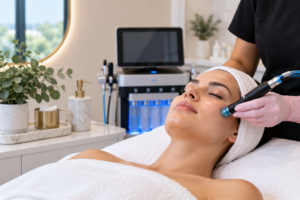

A HydraFacial in Vaughan typically costs between $175 and $325 per session, with the range depending mainly on whether you book a standard HydraFacial or the more advanced HydraFacial MD, plus any add-ons like LED light therapy or a targeted booster serum. Knowing that range upfront matters, since it’s the difference between budgeting for one relaxing treat and planning a recurring line item in your skincare routine — and the two commitments call for different decisions. This guide breaks down what drives that price, what actually happens during a session, how many treatments most clients need, and how to tell if HydraFacial is the right fit for your specific skin concerns before you book a free consultation.
What a HydraFacial Actually Costs
HydraFacial treatments start at $199 per session for a standard treatment, while the average HydraFacial costs about $175 to $199 depending on the provider and treatment area. HydraFacial MD, which uses stronger exfoliating solutions and often includes additional boosters, typically ranges from $225 to $325 per treatment. Many providers offer discounts for first-time HydraFacial clients, and monthly packages for HydraFacial treatments may reduce overall costs for patients planning regular sessions rather than a single visit.
What Is a HydraFacial Treatment?
A HydraFacial is a non-invasive hydradermabrasion treatment that combines multiple skin care processes into one facial treatment. Unlike traditional exfoliating treatments or laser treatment options, it uses patented Vortex-Fusion technology to cleanse, extract, and hydrate the skin’s surface in a single session, using gentle suction rather than harsh mechanical abrasion.
Because it doesn’t rely on heat or aggressive extraction, HydraFacial is suitable for all skin types and tones, including sensitive skin and reactive skin that might not tolerate more intense exfoliating treatments well.
The Three-Step HydraFacial Process
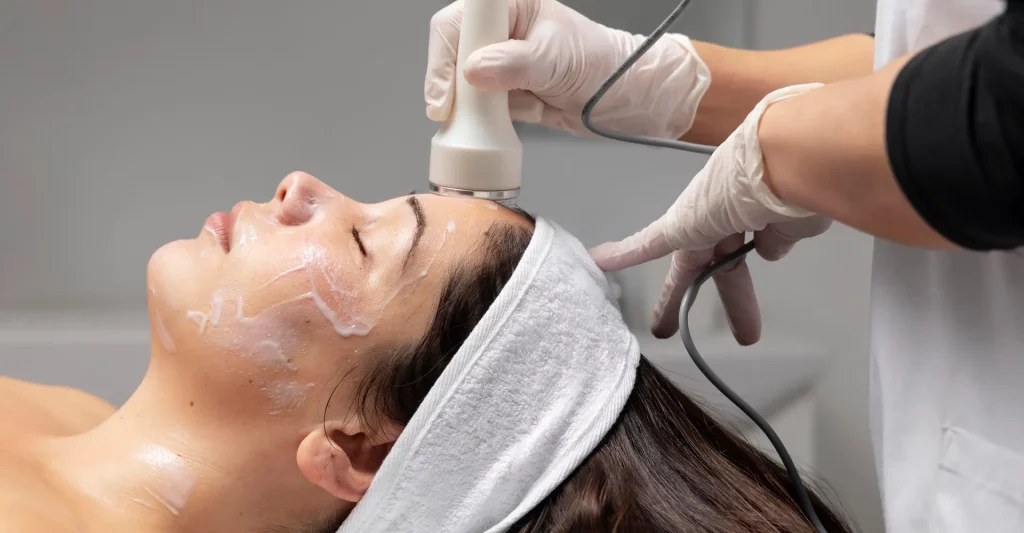
The process includes three steps: cleanse, extract, and hydrate. During cleansing, a mild glycolic and salicylic acid peel is applied to loosen dead skin cells and clear congested skin. The extraction step uses gentle suction to lift out dirt, oil, and debris from clogged pores without the pinching sensation associated with manual extractions.
The final step infuses the skin with antioxidants and hyaluronic acid, delivering intense hydration and nourishing serums suited to your specific skin concerns. The entire treatment area is addressed in roughly 30 to 45 minutes from start to finish.
HydraFacial vs HydraFacial MD
Standard HydraFacial and HydraFacial MD use the same core patented technology, but HydraFacial MD typically includes a stronger acid concentration and access to more targeted boosters for specific skin concerns like hyperpigmentation, fine lines and wrinkles, or acne. Patients with more visible signs of aging skin or stubborn skin quality issues often start with HydraFacial MD for more visible skin refinement, while those focused on general skin health and maintenance may find standard HydraFacial sessions sufficient.
What Happens During Your Session
After a quick consultation about your skin condition and goals, your provider selects serums suited to your skin type, whether that’s targeting dehydrated skin, uneven skin tone, or rough texture. The treatment feels like a deep cleanse with light suction, and most clients describe minimal to no discomfort throughout.
Many clinics add blue LED light therapy or red light therapy at the end of the session, particularly for clients dealing with both acne and general skin quality concerns, since light therapy can support collagen production and calm active breakouts.

Benefits of HydraFacial for Different Skin Concerns
The benefits of HydraFacial extend across a wide range of skin concerns. It can improve skin tone and texture by minimizing enlarged pores and hyperpigmentation, while also addressing fine lines through deep exfoliation and hydration. Clients with congested or clogged pores often see a visible reduction in pore size and a more even skin tone shortly after treatment.
For clients focused on long term skin health rather than a one-time refresh, HydraFacial supports the skin barrier and helps maintain hydration between more intensive treatments like chemical peels.
How Light Therapy Enhances Results
LED light therapy is often layered onto a HydraFacial session as a complementary, nonablative facial rejuvenation add-on. Blue LED light therapy targets acne-causing bacteria, while red light therapy is generally used to support collagen production and calm inflammation. Because light therapy doesn’t involve any heat or downtime, it pairs naturally with the gentle nature of HydraFacial itself.
Nonablative Facial Rejuvenation: What That Actually Means
HydraFacial falls into a category called nonablative facial rejuvenation, meaning it improves skin quality without removing or damaging the top layer of skin the way more aggressive treatments do. This is precisely why HydraFacial provides immediate results with no downtime, making it a popular innovative modality for clients who want visible improvement without the recovery period associated with deeper chemical peels or laser treatment.
How Long Results Last and How Many Sessions You Need
The visible effects of a HydraFacial typically last about one week, with smoother skin and a natural glow being the most immediately noticeable change. For clients managing ongoing skin concerns like congested skin or dullness, regular sessions of HydraFacial, approximately every 4 to 6 weeks, can help maintain results and support more lasting improvement in skin texture and skin tone over time.
What Affects HydraFacial Cost
A few factors shift the final HydraFacial cost. Choosing HydraFacial MD over the standard version increases the price due to stronger formulations and added boosters. Add-ons like LED light therapy, lymphatic drainage, or a specialized antioxidant serum for aging skin also add to the total. Booking a package of hydrafacial sessions rather than a single visit is usually the most cost-effective route for clients planning regular treatments.
Recovery and Aftercare
Temporary redness may occur after a HydraFacial treatment, and skin may feel tight or slightly irritated for up to 72 hours in some cases. Tingling sensations may occur immediately after treatment but usually subside within a few hours. Because the skin’s surface is more susceptible to sunburn after a HydraFacial, it’s important to avoid sun exposure for at least 72 hours post-treatment and to apply sunscreen diligently in the days that follow.
Most clients return to normal activities within a few hours of their appointment, since there’s no real downtime associated with the treatment.
Who Should Avoid or Delay HydraFacial
Clients should avoid HydraFacial if they have active rosacea or an active rash, since the exfoliation and suction can aggravate inflamed skin. Anyone who has used Accutane in the last year should postpone HydraFacial until cleared by their dermatologist, and patients with extremely sensitive skin should consult a provider beforehand to confirm the right serum selection. HydraFacial is not recommended during pregnancy without consultation, since some active ingredients used in stronger formulations aren’t advised during that time.
Is HydraFacial Right for You?
HydraFacial works well for most skin types looking to improve overall skin health, address dullness, or manage mild congestion without downtime. It’s a strong option for clients wanting a radiant complexion before an event, or for those building a long-term skincare routine around regular treatments. Clients with more significant skin concerns, like deep acne scarring or advanced sun damage, may need to combine HydraFacial with other treatments for the best outcome.
HydraFacial vs Chemical Peels and Other Treatments
Compared to traditional chemical peels, HydraFacial offers gentler exfoliation with no peeling or visible flaking afterward, making it a better fit for clients who can’t take downtime for recovery. Chemical peels can achieve deeper exfoliation for more stubborn skin concerns, but they typically require more recovery time. Many clients alternate between the two, using HydraFacial for regular maintenance and reserving chemical peels for more targeted, occasional treatment.
What Most People Get Wrong About HydraFacial
Most people assume just one treatment will permanently resolve a skin concern like enlarged pores or fine lines. In reality, HydraFacial delivers clinically proven results for that specific session, but ongoing skin quality depends on regular treatments and a consistent skincare routine at home. The other common misconception is assuming HydraFacial can replace medical-grade treatments for serious skin conditions — it’s excellent for maintenance and glow, but not a substitute for dermatologist-directed care when a real skin condition is present.
Frequently Asked Questions
What is a HydraFacial treatment and how does it work?
A HydraFacial treatment is a non-invasive facial that cleanses, extracts, and hydrates the skin using patented Vortex-Fusion technology. It removes dead skin cells and clears clogged pores through gentle suction, then infuses the skin with hyaluronic acid and antioxidants, leaving glowing skin with no downtime required afterward.
How much does a HydraFacial cost in Vaughan?
HydraFacial cost in Vaughan generally ranges from $175 to $199 for a standard session, while HydraFacial MD, which includes stronger formulations and boosters, typically costs $225 to $325. Pricing depends on the provider, add-ons like LED light therapy, and whether you book a single session or a package.
What are the benefits of HydraFacial compared to other facials?
The benefits of HydraFacial include immediate results with no downtime, improved skin tone and texture, reduced pore size, and hydration through hyaluronic acid infusion. As a nonablative facial rejuvenation option, it’s gentler than chemical peels or laser treatment, making it an accessible, innovative modality for most skin types.
How many HydraFacial sessions will I need to see results?
Most clients notice a visible improvement after just one treatment, though the effects typically last about one week. For ongoing skin concerns, regular hydrafacial sessions every 4 to 6 weeks are generally recommended to maintain smoother skin and a more consistent, radiant skin tone over time.
Book a Free Consultation
The best way to know your exact HydraFacial cost and treatment plan is a quick, in-person conversation about your skin. Beauty Aesthetics offers a free consultation in Vaughan to assess your skin type, discuss whether standard HydraFacial or HydraFacial MD fits your goals, and walk through pricing and Affirm financing options before you commit to a session.