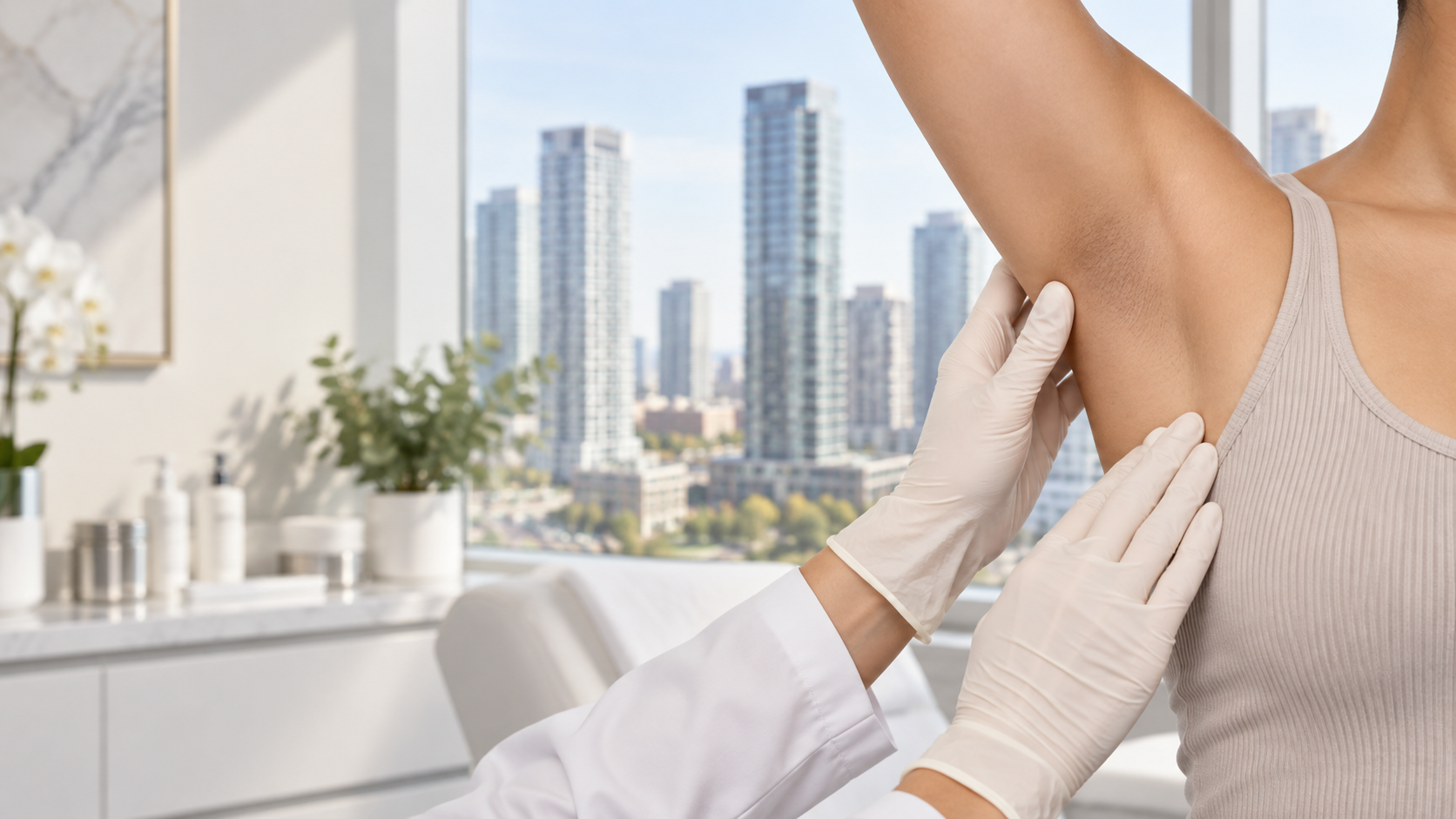
Dark underarms are caused by friction, shaving trauma, or irritating deodorants — and most cases respond within 4 to 12 weeks to the right product changes and treatment. This guide covers all causes and proven options, and the point where a Vaughan clinic like Beauty Aesthetics delivers results that home remedies cannot. Suitable for all skin tones.
Key Takeaways
- Most underarm darkening is post-inflammatory hyperpigmentation triggered by shaving 3 to 5 times weekly.
- Switching to laser hair removal eliminates the primary trigger in 6 to 8 sessions for most patients.
- Topical brighteners with niacinamide, azelaic acid, or kojic acid reduce visible discoloration within 4 to 8 weeks.
- Acanthosis nigricans requires a medical assessment before skin treatment.
- Clinical chemical peels and laser therapy produce visible improvement within 2 to 4 sessions for stubborn pigmentation.
Before You Start
Dark underarms are treatable in most cases, but not all cases are the same. Allow at least 6 weeks before judging whether a product is working — topical results accumulate slowly.
Switch one variable at a time: deodorant first, then exfoliation, then brightening, so you have clean data on what is helping. Adding everything at once makes it impossible to know what worked.
This is not a DIY job if the darkening appeared suddenly, has a velvety or raised texture, spreads beyond the underarm crease, or is accompanied by unexplained weight gain. Those patterns point to acanthosis nigricans or a systemic condition and need a physician’s assessment first.
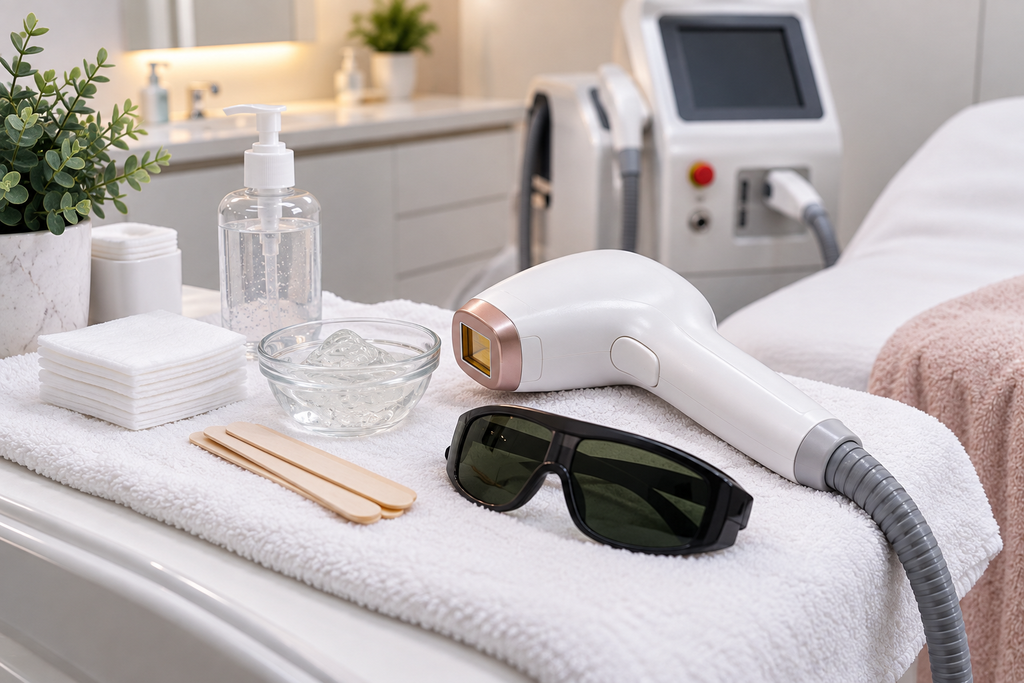
What You Need
- Fragrance-free, alcohol-free deodorant
- Clean razor (replaced every 5 to 7 shaves) or alternative hair removal method
- Fragrance-free daily moisturiser
- Over-the-counter topical with niacinamide, glycolic acid, or vitamin C
- Loose, breathable fabric tops (reduces ongoing friction)
- SPF 30 or higher if the underarm area receives any sun exposure
Safety and Prerequisites
Do not use lemon juice or other acidic home remedies immediately after shaving. Applying citric acid to freshly shaved skin causes irritation that worsens pigmentation.
If you have diabetes, polycystic ovary syndrome, or a thyroid condition, see a physician first — these conditions can drive underarm skin darkening independently of skin care habits.
Retinoid creams increase photosensitivity; avoid applying them to areas exposed to light. Do not layer multiple brightening actives in the same routine without professional guidance.
Step-by-Step: From Cause to Treatment
| Root cause | First action | Upgrade if needed |
|---|---|---|
| Shaving irritation | Switch to fragrance-free shaving cream + clean razor | Laser hair removal |
| Friction from clothing | Switch to loose, breathable fabrics | No clinical upgrade needed |
| Deodorant irritation | Switch to fragrance-free, alcohol-free formula | Patch test hypoallergenic brand |
| Dead skin cell buildup | Gentle glycolic acid 2x per week | Clinical chemical peel |
| Post-inflammatory pigmentation | Niacinamide or kojic acid topical | Laser therapy |
| Acanthosis nigricans | Physician assessment | Treat underlying condition first |
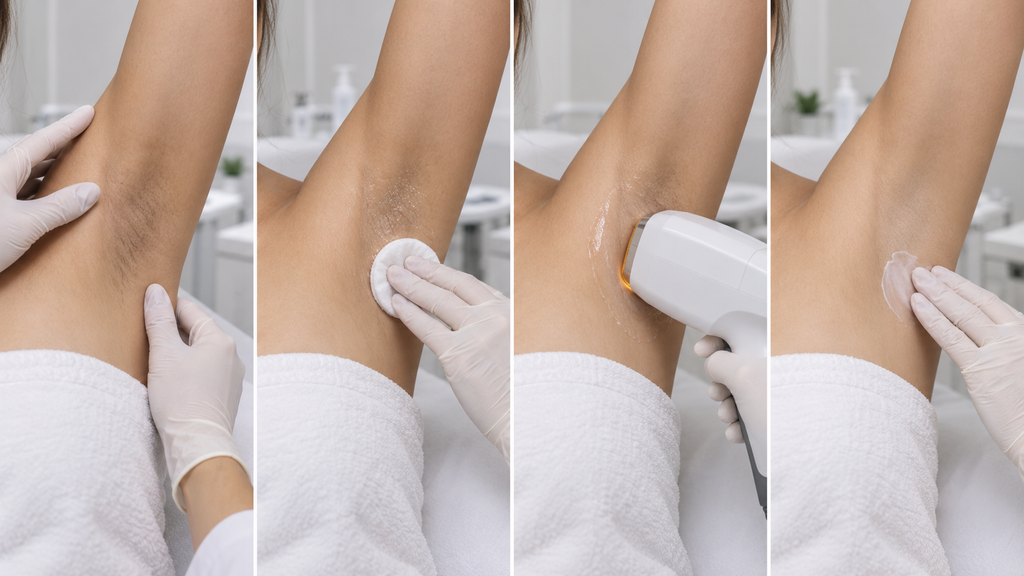
Step 1: Remove the Irritation Source
Stop whatever is actively causing inflammation before adding any brightening product. Deodorants containing strong fragrances irritate underarm skin and trigger melanin production.
Deodorants with alcohol worsen the reaction in sensitive skin. Switch to a fragrance-free, hypoallergenic formula and use it for at least 2 weeks before assessing any change.
Result to look for: reduced redness or prickling within 3 to 7 days. If irritation settles, this was a significant contributor.
If It Does Not Work First Time
If switching deodorant alone produces no change after 2 weeks, the trigger is likely shaving trauma rather than chemical irritation. Move immediately to Step 2 rather than continuing to trial other deodorant brands.
Most Common Cause
Shaving 3 to 5 times a week is the single most common driver of underarm darkening across all skin tones. Each pass of the blade creates micro-trauma that stimulates melanin as a defensive response — the same mechanism as post-inflammatory hyperpigmentation after an acne breakout.
Uneven skin tone and dark patches in the underarm area are almost always the result of this repeated cycle. Hair follicles that remain visible beneath the skin surface after shaving also contribute to the shadow appearance, compounding the discoloration even when the skin itself has no active irritation.
Stop Here If You See This
Stop all topical treatments and seek a physician assessment if the darkened skin has a distinctly velvety, raised, or rough texture and is not responding after 8 weeks of consistent care. This pattern is the diagnostic hallmark of acanthosis nigricans, which requires treating an underlying systemic condition rather than the skin surface.
Step 2: Address the Hair Removal Method
Shaving is the most common underarm darkening trigger because it combines blade friction, repeated passes over sensitive skin, and incomplete hair removal — the follicle root remains visible as a “shadow” that compounds discoloration.
Our laser hair removal in Vaughan service eliminates this cycle by targeting the follicle directly, reducing regrowth over a series of sessions and removing the weekly skin trauma keeping pigmentation active.
For patients not ready for laser, use a clean razor with shaving cream, shave in the direction of hair growth, rinse with cool water, and replace blades every 5 to 7 uses.
Result to look for: within 4 to 6 weeks of stopping shaving trauma, post-inflammatory pigmentation typically begins to fade visibly even without additional treatment.
Step 3: Apply a Targeted Brightening Treatment
Once irritation is controlled, add a topical brightener. Niacinamide reduces melanin transfer to skin cells and suits all skin tones. Glycolic acid exfoliates dead skin cells, allowing brightening actives to penetrate more effectively.
Kojic acid and azelaic acid inhibit the enzyme driving melanin production. Vitamin C adds antioxidant protection and helps even out uneven skin tone progressively with consistent use.
Apply once daily after showering to clean, dry skin. Do not combine glycolic acid with retinoids in the same application — alternate morning and night.
Result to look for: visible lightening within 4 to 8 weeks of consistent use.
Step 4: Maintain and Verify
Moisturise daily with a fragrance-free product to reduce friction and support the skin barrier. Wear breathable fabrics.
Avoid sun exposure to the underarm area while using brightening products, since UV light can reverse progress on dark patches and slow the fading of post-inflammatory discoloration.
Photograph the area in consistent lighting on day 1 and day 56 for an accurate comparison. If no visible improvement, proceed to clinical treatment.
When DIY Stops Being Sensible
Home treatment has clear limits. Established post-inflammatory hyperpigmentation present for more than 12 months will not clear reliably with over-the-counter products.
Acanthosis nigricans, or skin darkening driven by insulin resistance, hormonal imbalance, or another systemic cause, requires addressing the underlying condition first — topical brighteners will not produce lasting results while the root cause is active.
Skin sensitised by years of harsh deodorant use may have developed allergic contact dermatitis that requires a clinical approach before brightening is even possible.
This is also where the root-cause question matters practically. Continuing to spend on serums that address only the surface while shaving weekly — and re-triggering pigmentation with every session — is a loop. Treating the hair removal cause clinically breaks it.
You can read more about the evidence on our existing guide: laser hair removal for dark underarms.
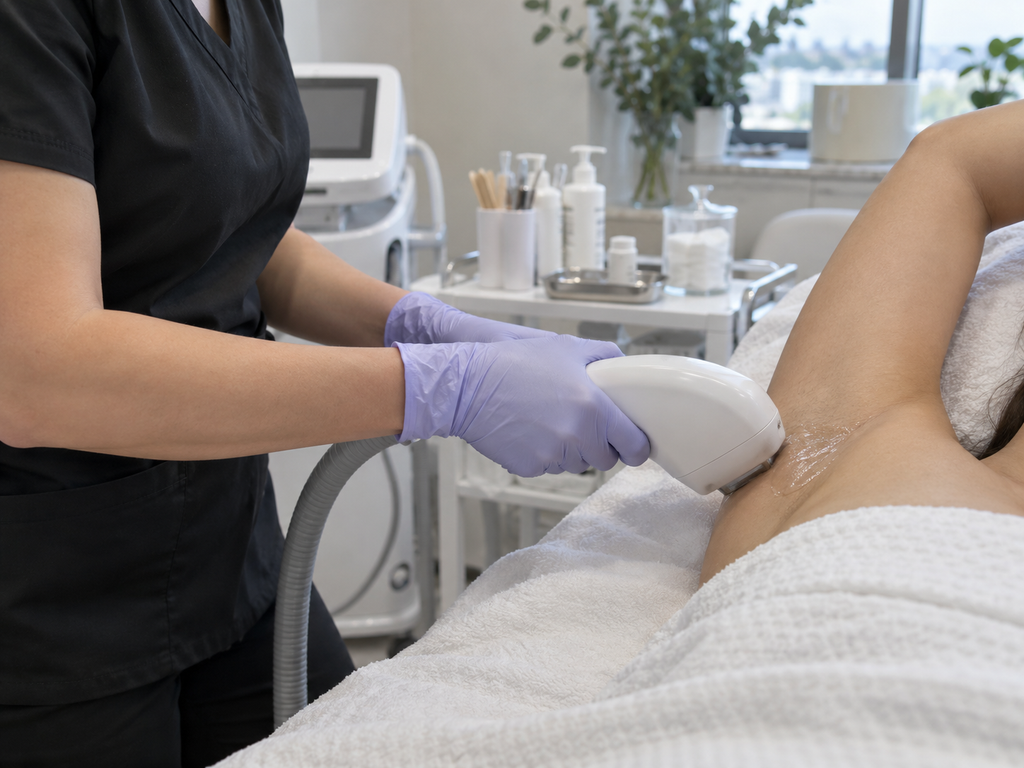
What a Vaughan Professional Does Differently
Beauty Aesthetics uses clinical-grade equipment and protocol-driven assessment rather than a one-size-fits-all approach. The treatment pathway for underarm darkening at a clinical level typically includes the following steps.
Skin assessment first. The cause of darkening is confirmed before any treatment begins — chemical irritation, shaving trauma, hormonal origin, and acanthosis nigricans each require a different first step. Using a laser on active acanthosis nigricans, for example, will not produce improvement.
Appropriate laser technology. Not every laser is safe for every skin tone on the underarm. Our clinic uses Nd:YAG systems for darker skin tones, which target melanin in the hair follicles while protecting surrounding pigment in the skin — the same standard described in our guide on laser hair removal safety for darker skin.
This matters particularly for underarm skin, where the skin tone is often several shades deeper than the face. Darker skin requires a longer wavelength that passes through surface pigment without triggering a burn reaction.
Chemical peels calibrated by skin tone and depth. Clinical chemical peels remove the accumulated layers of post-inflammatory pigment more aggressively than any over-the-counter exfoliant. The formulation, concentration, and number of passes are chosen based on your skin tone and how long the discoloration has been present.
Integrated treatment plans. For patients whose darkening is driven by ongoing shaving, the most efficient plan combines laser hair removal with a concurrent brightening protocol — eliminating the cause while treating existing skin darkening simultaneously. Explore a full overview of how laser hair removal works step by step before your consultation.
All treatments are performed by Mubeyra Sarkar, RN, under physician oversight per Ontario’s Regulated Health Professions Act.
Frequently Asked Questions
How do I get rid of dark underarms fast?
Remove the trigger first — switch to a fragrance-free deodorant and stop shaving with a dry razor. Add a niacinamide or glycolic acid topical daily. Most patients see visible improvement within 4 to 8 weeks. For faster results, a clinical chemical peel or laser session accelerates the timeline significantly.
What causes armpit discoloration in otherwise healthy people?
The most common cause is post-inflammatory hyperpigmentation from repeated shaving trauma, friction from tight clothing, or deodorant irritation. Genetics also influence how visibly melanin accumulates in the hair follicles and surrounding skin. None of these are hygiene problems — they are mechanical and chemical responses that affect all skin tones.
Does laser hair removal actually lighten dark underarms?
Indirectly, yes. Laser hair removal eliminates the weekly shaving trauma that keeps post-inflammatory pigmentation active. Once regrowth slows significantly after 6 to 8 sessions, the skin no longer receives repeated micro-trauma and pigmentation fades over several months. Some patients also see an improvement in the dark patches caused by visible follicle roots beneath the skin surface.
Can acanthosis nigricans be treated with skin lightening creams?
Topical treatments can reduce the visible discoloration, but do not address the underlying cause. If insulin resistance or a hormonal disorder is driving the condition, the skin will continue to darken without systemic treatment. A physician assessment is necessary before any cosmetic approach.
About Beauty Aesthetics
Beauty Aesthetics is a medical spa in Vaughan, Ontario, serving patients across the greater Toronto area since 2020. All injectable, laser, and clinical skin treatments are performed by registered nurses or physicians under a licensed medical director, in compliance with the College of Nurses of Ontario and the College of Physicians and Surgeons of Ontario. Located at Unit 4, 12 Woodstream Blvd, Vaughan. Phone: +1 647-260-9607.
Service Area
Beauty Aesthetics serves patients from Vaughan, Woodbridge, Concord, Maple, Kleinburg, Richmond Hill, North York, and Thornhill. Free on-site parking available. Evening and Saturday appointments offered.
Next Step
Dark underarms that have not responded to 8 weeks of home care, or that are caused by an ongoing hair removal habit, are best addressed in a single consultation. Book your free assessment for laser hair removal in Vaughan and leave with a clear treatment plan the same day. Call +1 647-260-9607 or book online at beautyaesthetics.ca.